Software Testing Hierarchy
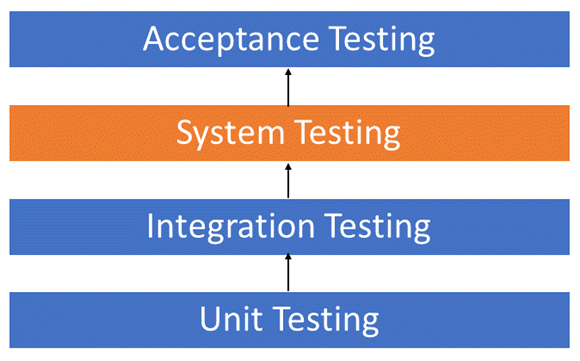
1. End to end testing: is to test the functionality and performance of an application under product-like circumstances and data to replicate live settings. The goal is to simulate what a real user scenario looks like from start to finish. It is a crucial step for an application.
2. Acceptance testing: Also known as User Acceptance Testing. It is conducted by users where they provide the requirements, prepare test cases, execute test cases and ensure all the defects are being closed before signing off the UAT. They need work closely with the business analyst, project managers or other key stakeholders.
System testing: System testing examines every component of an application to ensure they work as a complete and fully integrated. This is to verify if the system works as expected or not. Usually QA team conducts system testing after it checks individual modules with functional or user story testing and then each component through integration testing. It is a black box testing and is done after integration testing to ensure high-quality product is done.
Integration testing: It examines different units, modeless or components of an application are tested as a combined entity. In general, component integration testing is done by developers. However, if the organizations that have implemented test driven development, testers may be involved.
Unit testing: It examines individual units or components of an application. Testing usually carry out by developers an sometimes by QA.
Source from:What is System Testing? Types with Example (guru99.com)
Comments
Post a Comment